The Wall Inside Your Head
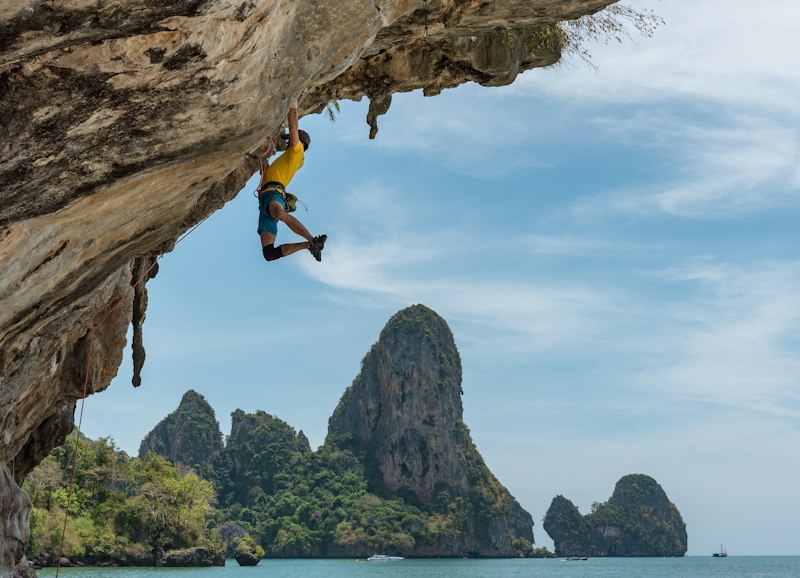
There is a moment on every hard route where your body wants to quit before it actually needs to. Your forearms are screaming, your feet are smearing on nothing, and the next bolt feels impossibly far away. In that moment, the climb is not physical anymore — it is entirely mental.
I spent years believing I was not strong enough for certain grades. Turns out, I was strong enough. I was just scared enough to never find out.
Learning to Fall
The breakthrough came during a session at Rifle in the fall of 2024. I was working a 5.13d that had shut me down for weeks — not because of any single hard move, but because of a runout section where falling felt unacceptable.
The irony of climbing is that the thing you are most afraid of — falling — is usually the thing that sets you free.
My coach suggested something radical: practice falling. Not accidentally. Deliberately. Climb to the scary spot, and let go. Over and over until your nervous system gets the message that falling is survivable.
It sounds simple. It was one of the hardest things I have ever done.
The Three-Breath Protocol
Through that process, I developed what I call the Three-Breath Protocol. When I hit the fear zone on a climb, I do this:
- Breath one: Acknowledge the fear. Name it. I am scared of falling here.
- Breath two: Check the reality. Is the fall actually dangerous, or does it just feel that way?
- Breath three: Commit. Either climb or fall, but do not hang in the in-between.
The in-between is where injuries happen — both physical and mental. Half-committing to a move is more dangerous than fully committing or fully falling.
Nutrition and the Nervous System
What surprised me most was how much nutrition affected my mental game. When I started working with a sports dietitian (before I became one myself), I learned that:
- Blood sugar crashes amplify anxiety and fear responses
- Dehydration impairs decision-making before it impairs strength
- Caffeine timing matters — too much before a lead attempt can push productive anxiety into paralyzing fear
- Magnesium and omega-3s support nervous system recovery between sessions
Dialing in my nutrition did not make me braver. But it removed the false signals that were making me more afraid than I needed to be.
What Climbing Taught Me About Life
The mental game of climbing is really just the mental game of life, compressed into a vertical format. Every time you are standing at the base of something intimidating — a career change, a hard conversation, a new project — the same dynamics are at play:
- Your brain overestimates the risk
- The in-between (indecision) is the most dangerous place
- Practicing small failures builds resilience for big moments
- Your physical state affects your mental courage
I still get scared on hard routes. The difference now is that I know what to do with the fear. It is not a stop sign anymore. It is a checkpoint.
And sometimes, the best thing you can do is just let go.